
With a think-pair-share strategy, one classroom question becomes three chances to learn: students think on their own, test their thinking with a partner, and then bring ideas to the class. Rather than rewarding only the quickest volunteer, the routine gives every student a private starting point and a rehearsed path into discussion.
How the think-pair-share strategy turns one prompt into a real discussion
In 1981, Frank Lyman and colleagues at the University of Maryland developed Think-Pair-Share as a cooperative discussion strategy. Before anyone else’s answer can steer them, students form a thought. With a peer, they then compare and refine that thought. In the final stage, the class hears a wider range of reasoning.
- Think: Ask a prompt and give students quiet time to work individually. For a short question, that may be only a few seconds; a richer prompt needs more room.
- Pair: Students turn to an assigned partner, a neighbor, or a table partner. They compare answers, notice differences, and prepare what they will share.
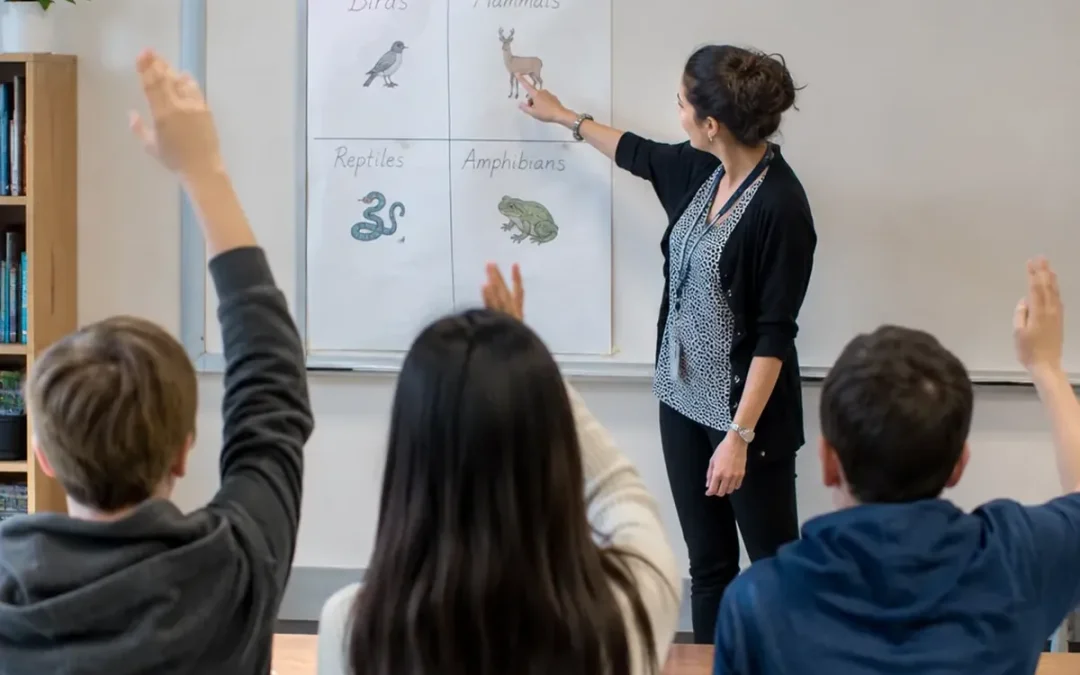
- Share: Invite pairs to contribute through a round robin or volunteers. As ideas emerge, record them on the board and use them to extend the class conversation or address a misconception.
For productive partner talk, choose a prompt that leaves room for two students to begin differently. In math, ask students to create a multiplication word problem, exchange problems, solve a partner’s problem, and then share a few with the whole class. In that sequence, students reason rather than give a fast recall response.
Give students enough time to form a thought
As a response to a familiar pattern, Think-Pair-Share began with teachers who often wait less than one second after asking a question. In Mary Budd Rowe’s work on wait time, extending the average pause to three to five seconds was associated with student answers that were 300% to 800% longer. At one second, answers tend to be short phrases; by three seconds, explanations and qualified conclusions become more complex.
To match the clock to the task, begin with the depth of the prompt. In one recommendation, students use three to four minutes to think, about five minutes to pair, and five to ten minutes to share. For a simple question, use five to six seconds of thinking and about ten seconds of partner talk. Rather than follow a fixed formula, make the quiet time visible enough that students know they are expected to think before they speak.
| Question type | What students need | A workable move |
|---|---|---|
| Quick check | A brief pause before talking | Signal silent thinking, then let partners compare. |
| Interpretation or solution | Time to develop an explanation | Use a visible timer and ask partners where their ideas agree or differ. |
| Open-ended topic | A way to hold onto an idea | Use Think-Write-Pair-Share: students write for one to three minutes before talking. |
Build a routine that does not leave participation to chance
Early in the term, start small with low-risk prompts. Before the activity, decide partnerships, then change them weekly or by topic so that no one is left searching for someone to work with. With a visible timer and a clear transition—“Think time is over; turn to your partner”—the routine becomes easier to repeat.
During the pair phase, circulate. As you move, listen for ideas worth bringing forward, help a stuck pair, and redirect off-task talk with a specific follow-up. Before the share, give partners time to agree on what they will report. By randomly selecting pairs rather than calling only on volunteers, keep the final stage from returning to the same confident voices.
Use roles when one partner carries the talk
For clearer turns, label partners A and B so one speaks while the other listens, then switch. In Timed-Pair-Share, each partner gets 60 seconds of talk time. If a pair finishes early, add an extension such as “What else might you add?”
Use think-pair-share across subjects, grades, and formats
From K–2 through university classes, this teaching strategy can take less than 20 minutes. For younger learners, use shorter directions and simpler language. With older students, use discussion stems and academic words such as counterpoint, synthesize, and validate.
- Reading: After a passage or chapter, ask students to consider an issue and share their thoughts with a neighbor.
- Science: Pause before an experiment so pairs can state a hypothesis.
- Math: Have partners compare solution paths, not just final answers.
- Social studies: Use a knowledge inventory: students write what they already know about a topic, compare lists, and help create a class list.
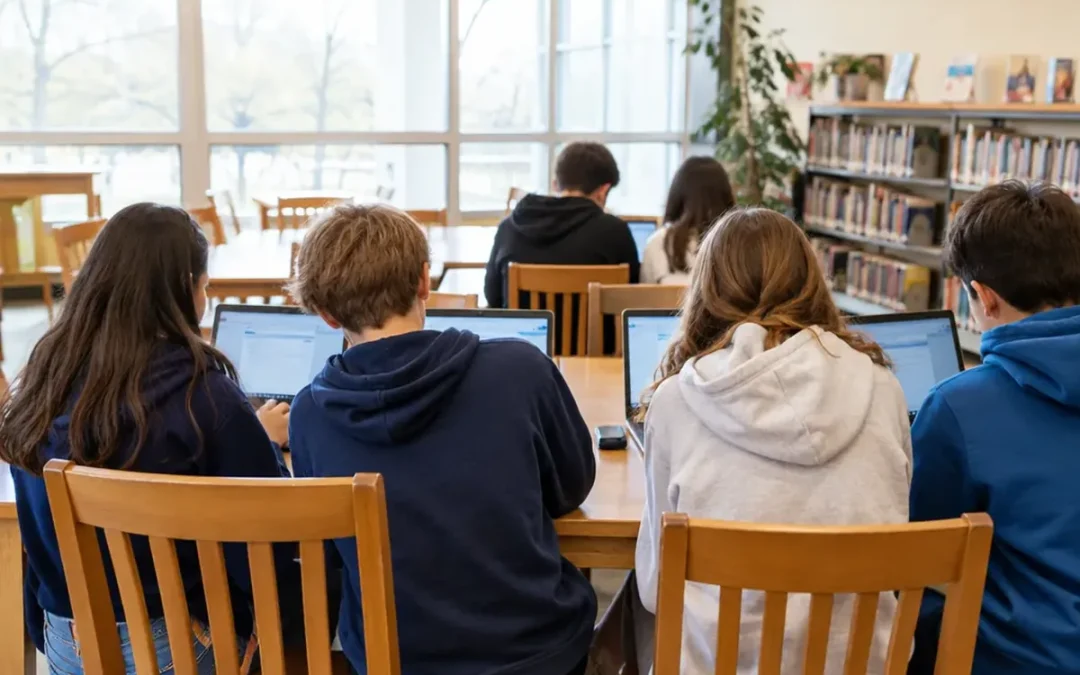
- Online or hybrid learning: Post the prompt, give note-taking time, send pairs to breakout rooms, then collect ideas through chat, a poll, a whiteboard, or a shared document.
In a hybrid class, in-person students can pair together while online students use their own breakout rooms.
Make room for more learners without lowering the thinking
By letting every student prepare an idea before speaking, Think-Pair-Share supports inclusive instruction. For slower processors, shy students, and Emergent Bilinguals, that pause can reduce pressure before they rehearse language with a partner and speak to the class. In a study of 393 ninth graders, Think-Pair-Share produced more hand raising than direct sharing or Think-Share without the pair stage; shy students benefited especially from the reduced anxiety.
For the goal at hand, choose pairs deliberately. In mixed-ability pairs, a stronger learner can support a peer; same-level pairs can be useful for a particular need. To lower the stakes of whole-class sharing, ask a student to report the partner’s idea rather than their own.
Turn partner talk into a quick check for understanding
Before, during, or after instruction, use the activity to see what students understand. For this purpose, ask a question that requires comparison, explanation, or a solution—not a procedural question with one answer. While pairs talk, note recurring ideas and gaps. During the share, collect answers on a board, ask pairs to compare them, and directly address a misconception that appears.
By explaining a thought to someone else, a student can expose a gap they did not notice alone.
Know the limits and avoid common think-pair-share myths
Myth: Any question works
For recall, procedural, and clarification questions, partners usually lack a real reason to talk. Instead, choose a prompt with enough cognitive depth that students may begin with different ideas.
Myth: Fast means effective
In many classrooms, the most common mistake is skipping or rushing the think phase. With a pause under three seconds, answer quality can stay low. Although Think-Pair-Share does not need to be long, the question must justify the time it takes.
Myth: Sharing means calling on volunteers
With volunteer-only sharing, the old dynamic in which the most confident students speak can return. To widen the sample, use random pair selection, a round robin, or partner-reporting. When the main learning goal is already met through thinking and pairing, some teachers omit the final share.
Myth: Noise means the strategy has failed
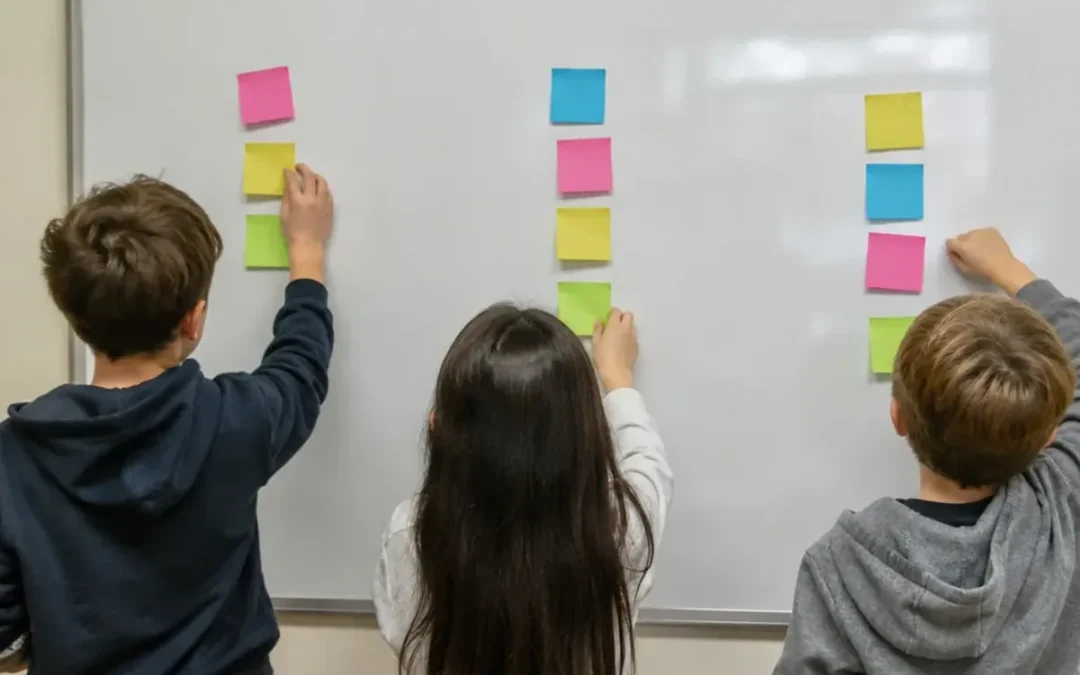
Especially in a crowded classroom, partner talk can raise the noise level. To keep work focused, use a specific prompt, teacher circulation, timed turns, or a written version with sticky notes.
Frequently Asked Questions
Why is Think-Pair-Share effective for student participation?
Before public speaking, students get private thinking time and a lower-risk rehearsal with a partner. With that structure, anxiety can ease; in the ninth-grade field study, more hand raising appeared than in conditions without the pair stage.
What are the benefits and drawbacks of Think-Pair-Share?
Among the benefits are structured accountability, a private space to test an idea, and a chance to revise thinking through comparison. On the other side, plan for the time required, possible noise, uneven partner talk, and a share phase that can still favor confident volunteers unless you structure it carefully.
What is Vygotsky’s theory of collaborative learning?
In Vygotsky’s view, higher mental functions develop through social interaction with more knowledgeable others. His zone of proximal development names the space between what a child can do alone and what the child can do with help; within that space, thoughtful peer talk can work.
What are the five most effective teaching strategies?
For every classroom, no single universal, evidence-backed list of five strategies exists. In a 2024 systematic review, Think-Pair-Share was one of five established cooperative learning strategies in higher-education physics; use it when the learning goal benefits from individual reasoning followed by peer exchange.
What are the 5 P’s classroom rules?
As a set of rules, the 5 P’s are not a standardized research model. In a common mnemonic, the words are Prompt, Prepared, Productive, Polite, and Positive; some versions use Position instead of Positive. For partner work, they can support routines when your class understands what each behavior looks like.